
Last updated November 17, 2026
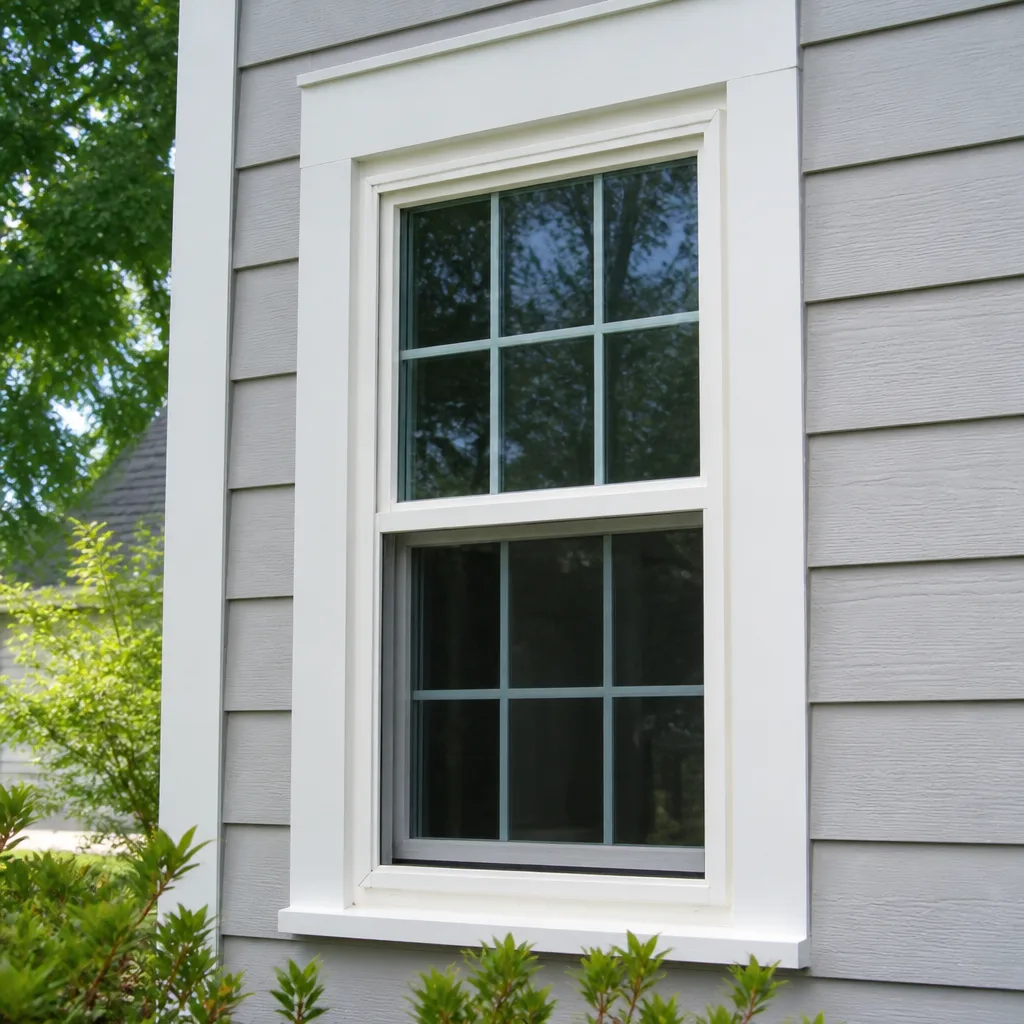 Single hung
 Double hung
 Horizontal roller
 Casement
 Bay & bow
 Sliding glass doors
 Entry doors
 Impact garage doors
 PGT
 CGI
Free in-home measure and quote - PGT, CGI and CWS impact lines compared on your actual openings, style by style
Get your free estimateWindow Installation Maintenance Checklist for Enterprise Homeowners
Here is the number that should get your attention: a seal failure that costs about $400 to fix at year three can cost $1,800 to fix at year seven, because by then the frame has racked and you are no longer replacing glass. You are replacing a window. We have watched this happen on hundreds of Enterprise homes where one overlooked detail in the first year turned a small repair into a full replacement down the road. This guide is built backward from the failure points we actually see on Enterprise installs, not from a generic seasonal list. You will learn what to check at 90 days, at year one, and every year after, and why the order matters.
Quick Answer
A proper window maintenance routine for an Enterprise home has four stations: a 90-day post-installation walk-through, an annual weatherstrip and drainage inspection, a no-tools seal test on every double-pane unit, and hardware lubrication two to four times a year because of desert dust. Keep the paperwork on every window in one folder. That covers 90 percent of what protects the window and the warranty.
Styles & brands we work with
- Single hung
- Double hung
- Horizontal roller
- Casement
- Bay & bow
- Sliding glass doors
- Entry doors
- Impact garage doors
- PGT
- CGI
Table of Contents
- Why Enterprise Windows Age Differently
- The 90-Day Post-Installation Walk-Through
- How to Test Double-Pane Seal Integrity Without Tools
- The Annual Weatherstrip Compression Check
- Hardware Lubrication in a High-Dust Environment
- Weep Holes, Caliche, and Sill Pan Drainage
- The Documentation File That Protects Your Warranty
- Common Mistakes to Avoid
Why Enterprise Windows Age Differently
Enterprise sits in a stretch of the Mojave where the temperature swing between a July afternoon and a July night can run 30 degrees or more. We routinely see 105-degree days and winter mornings that drop near freezing. That daily expansion and contraction is what wears out a window installation, not sun alone. The frame moves, the weatherstrip compresses and releases, and the sealant at the perimeter works itself loose over years. Add wind-driven dust off the open desert and you get a maintenance profile that looks nothing like a coastal city’s.
The dust matters more than most homeowners realize. It packs into weep holes, it coats hardware until the tracks feel gritty, and it carries fine mineral dust that settles into the sill pan and hardens into a crust. Out in the newer subdivisions across the valley, where raw desert was graded right up to the foundation, we see that mineral pack build up faster than on older lots with established landscaping. That single detail changes the order of a maintenance checklist for an Enterprise house. Drainage and hardware checks move to the front, not the back.
So when we build a checklist for Enterprise homeowners, we start with the failure points and work backward to the inspections that catch them early. That is the whole idea behind this guide. What follows is what our technicians have learned checking windows here for years, written so you can do it yourself on a Saturday morning in about an hour.
The 90-Day Post-Installation Walk-Through
Ninety days after a new window goes in is the most useful inspection you will ever do on it. That is long enough for a real season to work on the installation, short enough that any flaw is still simple to correct, and it falls inside the coverage window that a done-right guarantee is meant to protect. Here is the exact sequence we run in Enterprise after an install:
- Open and close every operable window three full cycles. A casement that drags on the second cycle is telling you the frame shifted or the sash was set slightly off. A slider that climbs off its track after a month of dust is a hardware seating problem.
- Check the weep holes at the sill of every window. Look for mineral crust, dust pack, or anything blocking the small drainage slots. In Enterprise, caliche-style mineral dust plugs these faster than you would expect.
- Pour a cup of water into the sill pan (on windows that have one) and watch where it goes. It should drain away from the wall, not pool and sit. A puddle that lingers after ten minutes means the pan is not pitched right.
- Confirm IGU edge-seal integrity by looking at the sealed glass unit’s edge. Run a finger along the perimeter of the glass where it meets the frame. Any cloudiness, a faint milky band, or a soft spot at the edge is a seal that is already giving up. Catch it now and it is a warranty conversation, not a rebuild.
- Test the weatherstrip all the way around the sash by sliding a dollar bill into the gap and closing the window on it. If the bill pulls out with no resistance, the seal is not compressed. Repeat in the middle of every side.
- Look at the caulk line on the exterior where the frame meets the wall. A hairline crack in the first 90 days is normal thermal movement. A gap is not.
Write down what you find, date it, and photograph anything that looks off. Those photos become the record you hand a technician if something needs a second look. If a window you had installed fails any of these at the 90-day mark, call it in. A reputable installer will treat that as their work to correct, not yours. If you are at the shopping stage and have not yet chosen a window installer, read up on window installation in Enterprise before the first walk-through happens.
How to Test Double-Pane Seal Integrity Without Tools
Seal failure is the single most common window problem we diagnose in Enterprise, and most homeowners miss it for years because they do not know what they are looking at. A sealed double-pane unit, called an IGU, has a factory edge seal that keeps the gas between the panes dry. When that seal fails, moisture gets in and the window starts to fog from the inside. You cannot wipe it off because it is between the glass. Repairs run $400 to $800 for a single pane depending on size and gas fill. Wait until the frame has racked around a failed unit and you are looking at a full window replacement instead.
You can test seal integrity with nothing but your eyes and a warm afternoon. Here is what matters:
- Interior condensation on cold mornings is usually normal humidity variance. It shows up as fine droplets on the room-side glass and disappears as the room warms.
- Condensation between the panes is not normal. Any moisture, fogging, or a milky haze inside the glass sandwich means the seal is gone.
- A rainbow or oily sheen near the edge of the sealed unit is an early sign, before full fogging. Note it and watch it.
- A faint dark line gone gray or soft at the edge of the glass, yes that is the seal itself, is a warning sign.
The desert actually gives Enterprise homeowners a small advantage here. Our low humidity means interior fogging is rare except in the winter, so when you see it, it tends to be a real seal problem rather than an air-conditioning quirk. In homes around the older established neighborhoods, where evaporative coolers were common for years, we sometimes see more interior moisture and an occasional false alarm. Compare a suspicious window to the three nearest windows on the same wall. If one fogs and the others do not, the seal is likely the difference. When you are considering new glass versus a full window replacement in Enterprise, that same dry climate makes the decision simpler: a failed unit on a sound frame can often take new glass alone.
The Annual Weatherstrip Compression Check
Weatherstrip is the soft foam or bulb seal that runs around the sash and presses against the frame when the window closes. It is what keeps your cool air inside and the desert outside. In a high-swing climate like Enterprise, weatherstrip takes a beating. It compresses in the heat, hardens, and slowly stops springing back. Most of the air infiltration we find on six-year-old windows traces back to weatherstrip that has gone flat, not to a bad installation.
A proper seal feels firm when the window closes. You feel resistance in that last inch. The sash seats snugly with no rocking. A seal six months from failure feels soft by comparison: the sash closes with almost no effort, and there is a faint sliver of daylight or a draft at the top or bottom corner. Here is how to check it once a year, ideally in the fall before the cooler months when drafts show up:
- Shut off the HVAC for ten minutes so the house is quiet.
- Stand inside at dusk with the porch light on outside.
- Look at the perimeter of the closed window for any light coming through.
- Run the back of your hand slowly around the full gap, top, bottom, and both sides.
- Slide a piece of paper into the gap and close the window on it. If it pulls out with no friction, that section has lost compression.
Flat weatherstrip is inexpensive to replace and a worthwhile annual attention item. It is also one of the few maintenance jobs a homeowner can reasonably leave to a professional without overthinking it, because a technician will replace it as part of a tune-up. A modest seasonal tune-up is far cheaper than the cooling bill you pay in July once the seal has failed. If the weatherstrip on your windows is original and the windows are more than a decade old, expect to have it looked at.
Hardware Lubrication in a High-Dust Environment
Casement cranks, sliding door rollers, and the locking mechanism on every operable window depend on small moving parts that dust loves. In Enterprise, we recommend lubricating window hardware two to four times a year, not once. That is more often than a maintenance guide written for a temperate city will tell you, and it is the difference between a slider that glides at year ten and one that needs a new track. The desert does not stop blowing dust between spring and fall.
Not all hardware reacts the same way. Here is what we see:
- Casement crank operators with exposed gears gum up fastest. The dust mixes with old grease and turns into a paste that grinds the gears.
- Sliding patio door rollers collect grit in the track and wear the wheel surface faster than interior hardware.
- Locking handles and multi-point locks on PGT and similar impact-rated lines are usually sealed better and need less attention, but their exposed thumb-latches still collect dust.
- Awning and hopper operators tend to seize at the pivot points, which are the least accessible part.
Lubricate with a dry silicone spray or a light synthetic grease, not a heavy oil that will attract dust and make the problem worse. Work it into the moving parts, operate the window several times to spread it, then wipe off the excess. On a sliding door, vacuum the track first, then lubricate the rollers. When you have a slider that has already seized, that is usually the point where a technician should look at it before a homeowner forces it and bends the track. We’ve found that a four-minute lubrication job twice a year is the cheapest insurance against a hardware repair. If you are weighing whether to service, repair, or replace a door, our team can talk you through the door installation in Enterprise questions that come up at this stage.
Weep Holes, Caliche, and Sill Pan Drainage
Water is the quiet threat to a window in the desert because nobody thinks about rain here until a monsoon cell dumps an inch in an hour. The weep holes and the sill pan are the designed path for water to escape the window assembly. Block them and water has nowhere to go but back into the wall. In Enterprise, the blockage is almost never debris in the traditional sense. It is mineral dust, and it packs hard.
Here is the routine we suggest twice a year, once in the spring and once after the summer storm season:
- Find the weep holes. They are the small slots in the sill of the window frame, usually on the exterior.
- Shine a light into each one. A clear slot shows daylight or open drain track.
- If a slot is crusted over, loosen the mineral pack gently with a soft brush or a plastic pick. Never drive a metal tool into the hole, which can damage the drainage channel behind it.
- Flush with a cup of water and watch that it runs out the exterior side freely.
- On windows with a visible sill pan, confirm the pan still slopes away from the house. Water pooling and remaining after ten minutes is a pit
ch problem worth a professional look. Out in the newer Enterprise construction where builder-grade flashing was used and has since dried and pulled back, we sometimes find the sill pan is doing the only water work on the assembly. That makes it more important, not less. The one thing you should not do is caulk a weep hole shut because it looked like a gap. That is the exact opposite of what it is for. If a window is not draining and you cannot tell why, do not fix it blind. Call a professional.
The Documentation File That Protects Your Warranty
Here is the part most homeowners skip, and it is the part that determines whether a warranty claim goes smoothly five years from now. Warranties are only useful if you can prove the install date, the manufacturer line, and that any corrective work was done properly. That proof lives in a folder, paper or digital, one per window or one per job with a photo of each window tagged by location.
Keep these documents for every window in your Enterprise home:
- The purchase invoice for each window, showing model, size, and manufacturer line. This is what a warranty department asks for first.
- Both warranty layers in writing, the manufacturer’s product warranty and the installer’s workmanship warranty, with the duration of each stated clearly. If those numbers were never spelled out for you on paper, ask for them now.
- Photos of every window at install, and a photo of the exterior caulk line. Date them.
- Your 90-day walk-through notes and any photos of what you found.
- Records of any service calls, including weatherstrip replacements or hardware repairs, with the date and what was done.
This is one place a stack of paper matters more than any app. If the installer is no longer in business by the time a seal fails, the manufacturer’s warranty is still yours, but only if you can show the model and the install date. That is the whole reason The Keystone Standard registers both warranty layers in writing before the truck leaves the driveway, with durations stated. Do not trust a handshake and a promise on a warranty. Get it in writing, keep it in the folder, and check it once a year against your windows. A done-right guarantee is only worth what the paperwork at the bottom of it is worth.
Common Mistakes to Avoid
- Caulking over a plugged weep hole. It looks like a defect to a homeowner but it is a drainage slot. Seal it and the water has nowhere to go but into the wall.
- Treating between-pane fog as a simple glass haze. No amount of cleaning fixes a failed IGU seal. The fix is a new sealed unit or a new window, and waiting lets the frame rack around it.
- Lubricating hardware once a year in an Enterprise home. The dust here needs two to four touch-ups a year, especially on casements and patio door rollers.
- Throwing away the invoice and warranty paperwork. In a town where installers come and go, the paper in your folder is often the only thing that keeps the manufacturer’s warranty alive.
- Skipping the 90-day walk-through. It is the one inspection that catches a flaw while it is still the installer’s easy fix, inside the window that a done-right guarantee protects.
- Forcing a seized slider. Pushing a stuck door usually bends the track or snaps the roller. Stop when it resists and have a technician look at it.
- Assuming a desert home does not need drainage checks. Monsoon rain plus mineral dust is a harder combination on weep holes than steady coastal rain.
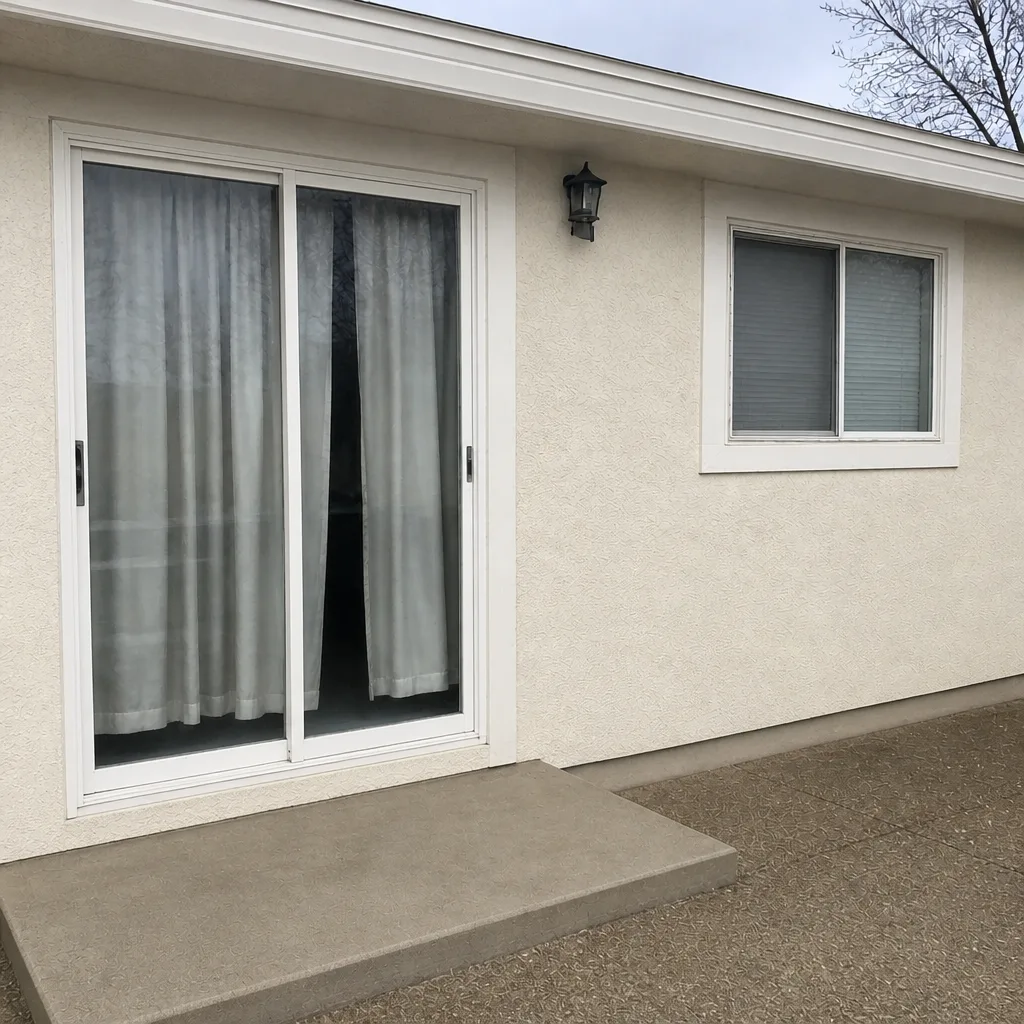
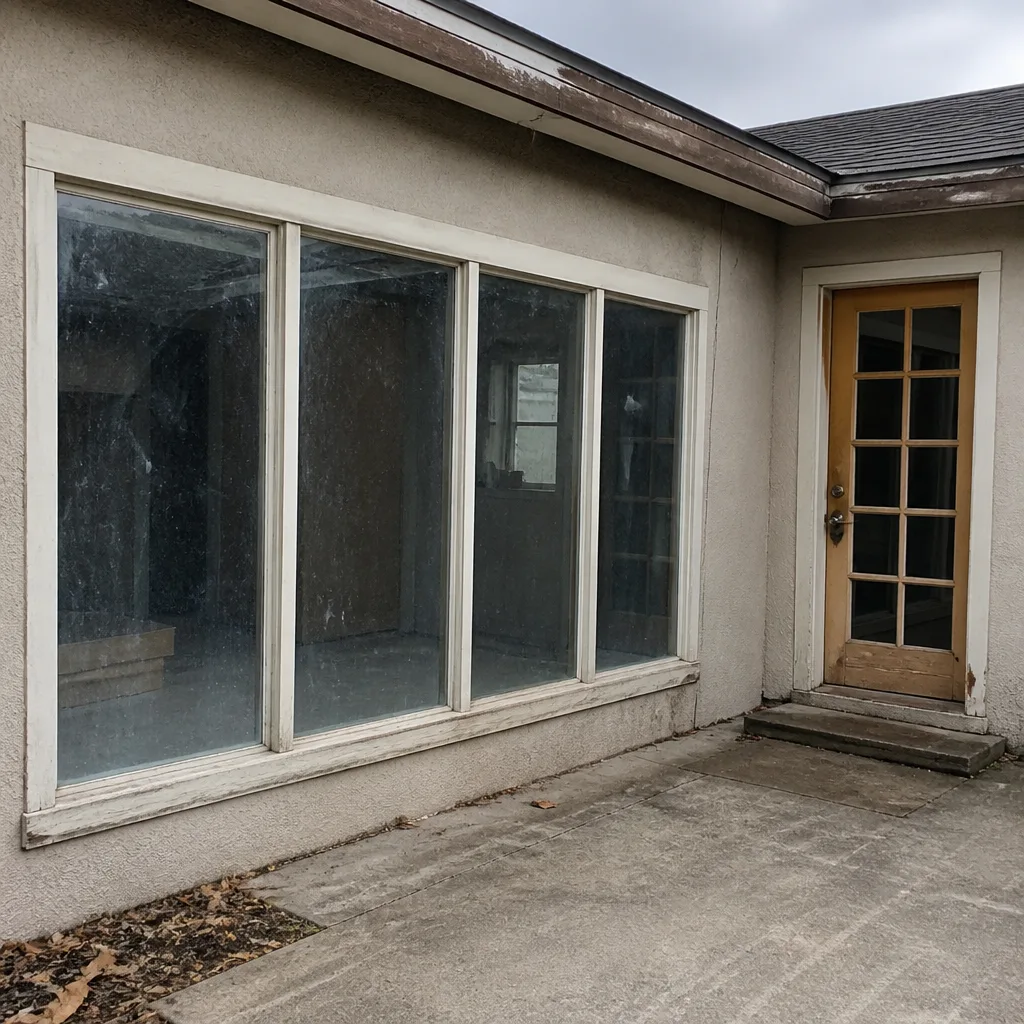
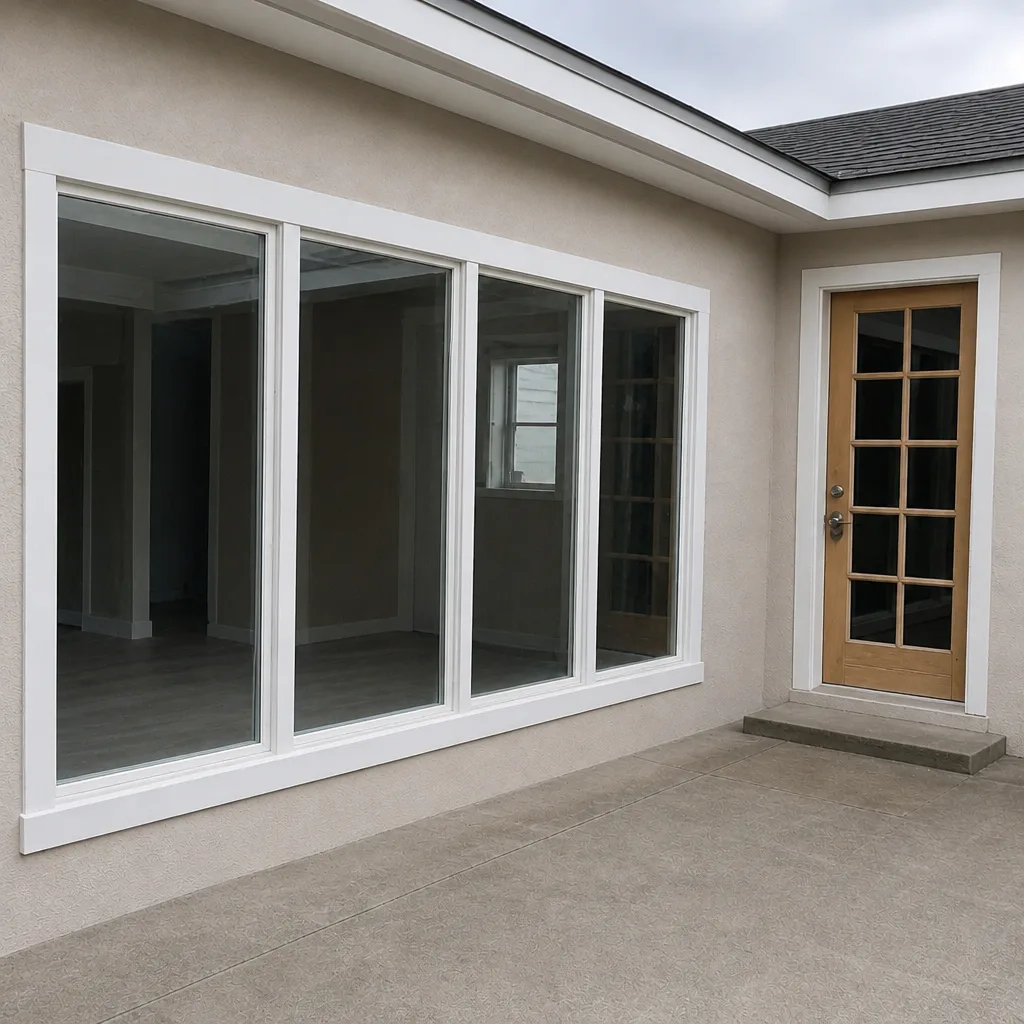
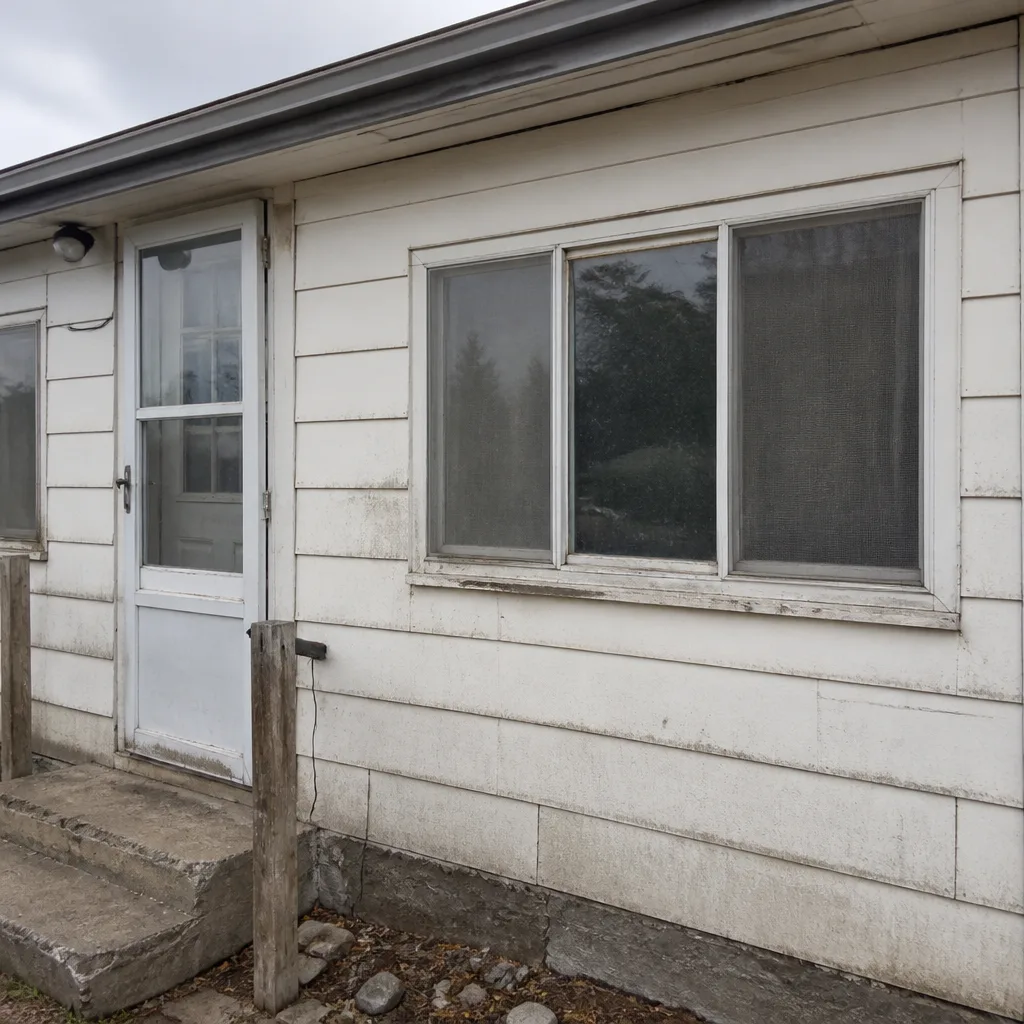
See the difference
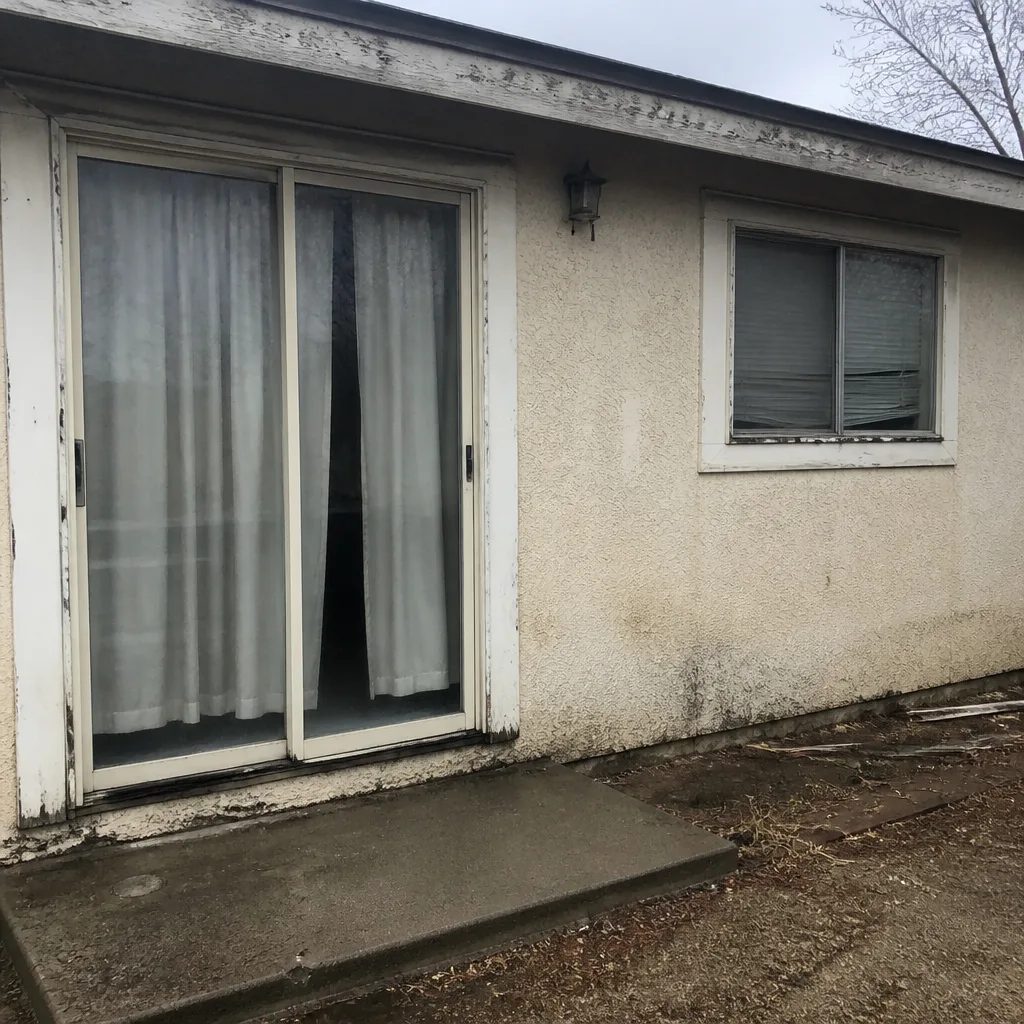 Before
 After
 Before
 After
 Before
 After
When to Call a Professional
Some maintenance belongs to you. Some does not. Call a professional when you see fog or a milky haze between panes, when a window does not close flush after you have checked the weatherstrip, when water stays in the sill pan after ten minutes, or when hardware has seized and will not move without force. Call when a window that was fine last year suddenly lets light through at the corner, and call before a monsoon season if you are unsure whether your weep holes are draining. Do not climb a ladder to inspect the exterior seal on a second-story window. We handle window service in Enterprise, and our team can sort out what is routine and what needs a repair. TruePane Windows & Doors Enterprise offers free estimates in Enterprise, and a live person answers every call at (844) 629-7617. You can also start from our TruePane Windows & Doors Enterprise home page to see the full scope of what we do.
Frequently Asked Questions
Do a full inspection once a year and a two-to-four-times-a-year hardware lubrication pass. The 90-day post-installation walk-through is a one-time item, but annual weatherstrip and drainage checks are what keep an Enterprise window working between tune-ups.
Look for fog, a milky haze, or an oily rainbow sheen between the panes, not on the room-side glass. If the moisture disappears when the room warms, it is interior humidity. If it stays between the panes, the IGU seal is gone and the glass needs replacing. Call (844) 629-7617 for a free assessment before the frame around it suffers.
Wind-blown mineral dust off the open desert packs into the tiny drainage slots faster here than in wetter climates. Check them twice a year, once in spring and once after the summer storms, and flush with a cup of water. Do not seal them with caulk.
Keep the invoice showing model and manufacturer line, both warranty layers with their durations stated in writing, install photos, your 90-day walk-through notes, and any service records. That folder is what proves the claim years after the installer has gone. If you do not have both warranty layers in writing, ask for them now.
Usually just a new sealed unit, if the frame is still true and the drainage works. A failed IGU on a sound frame can take new glass alone. Once the frame has racked, you are looking at a full replacement, which is why acting early on fog matters. Call (844) 629-7617 and we will tell you which one you are facing.
Yes. We service windows and doors we installed and windows we did not. Our technicians have up to 18 years of experience and will tell you plainly what needs repair and what does not. Call (844) 629-7617 to schedule a free estimate.
The Bottom Line
The list of maintenance items that actually protects an Enterprise window is short. Check drainage and weep holes after dust season, test your double-pane seals by eye, keep weatherstrip compression firm, lubricate hardware more than you think you need to, and keep the paperwork in one folder. Do the 90-day walk-through. That routine is what keeps a $400 glass repair from becoming an $1,800 window replacement. None of it requires special tools or more than an hour a season. And when something fails the eye test, do not force it or caulk it. Call TruePane Windows & Doors Enterprise at (844) 629-7617 for a free estimate, and we will tell you what the window needs.
Written by the team at TruePane Windows & Doors Enterprise.